





07/21/2026
Beshbarmag: Azerbaijan's Greatest Bird Migration Bottleneck
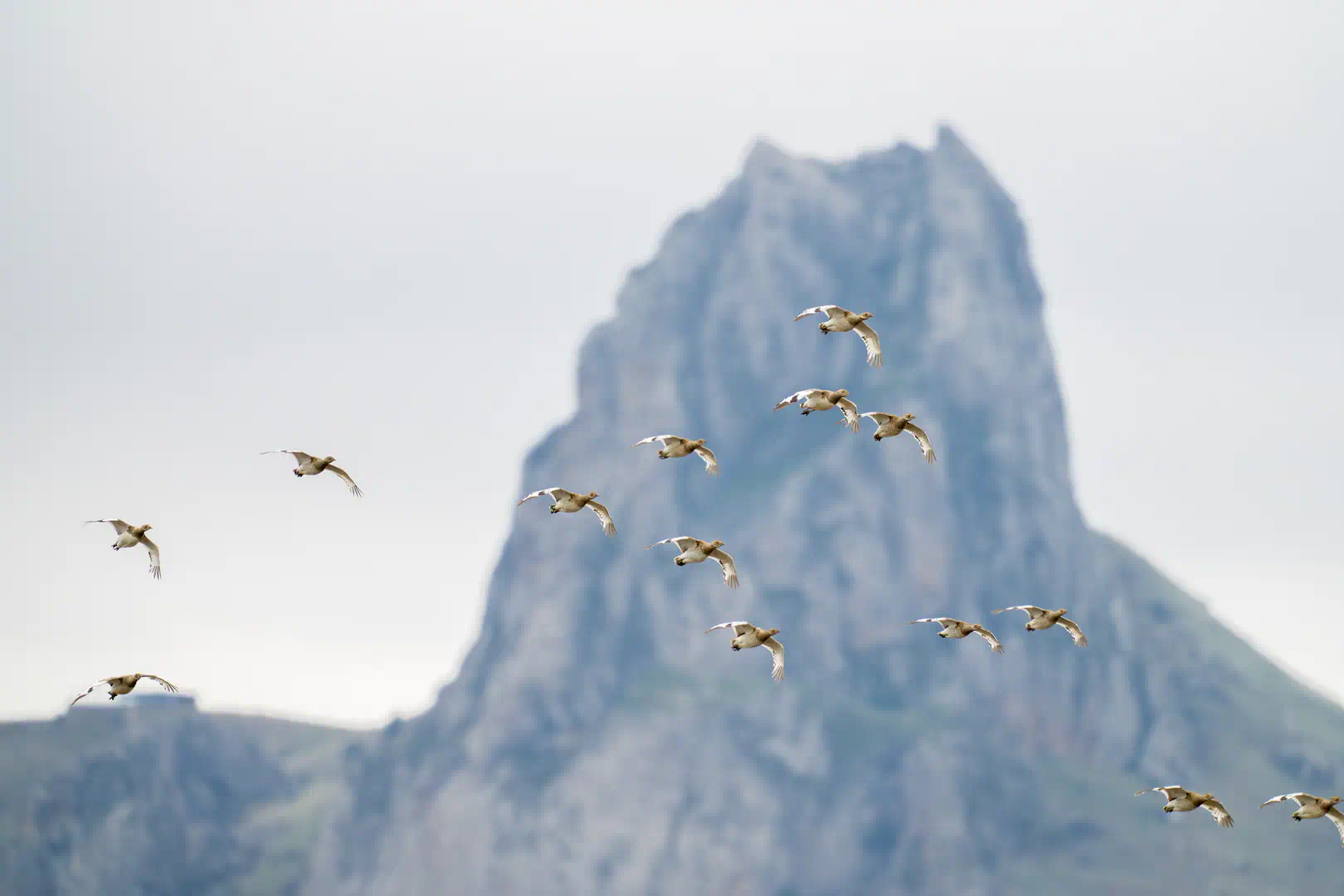
When people hear the name Beshbarmag, they often imagine the iconic rocky mountain rising from the coastal landscape, a sacred place for locals, or a familiar stop on the road between Baku and northern Azerbaijan. Every autumn, however, Beshbarmag becomes one of the best places for birdwatching in Azerbaijan, as millions of migrating birds funnel through this narrow corridor.
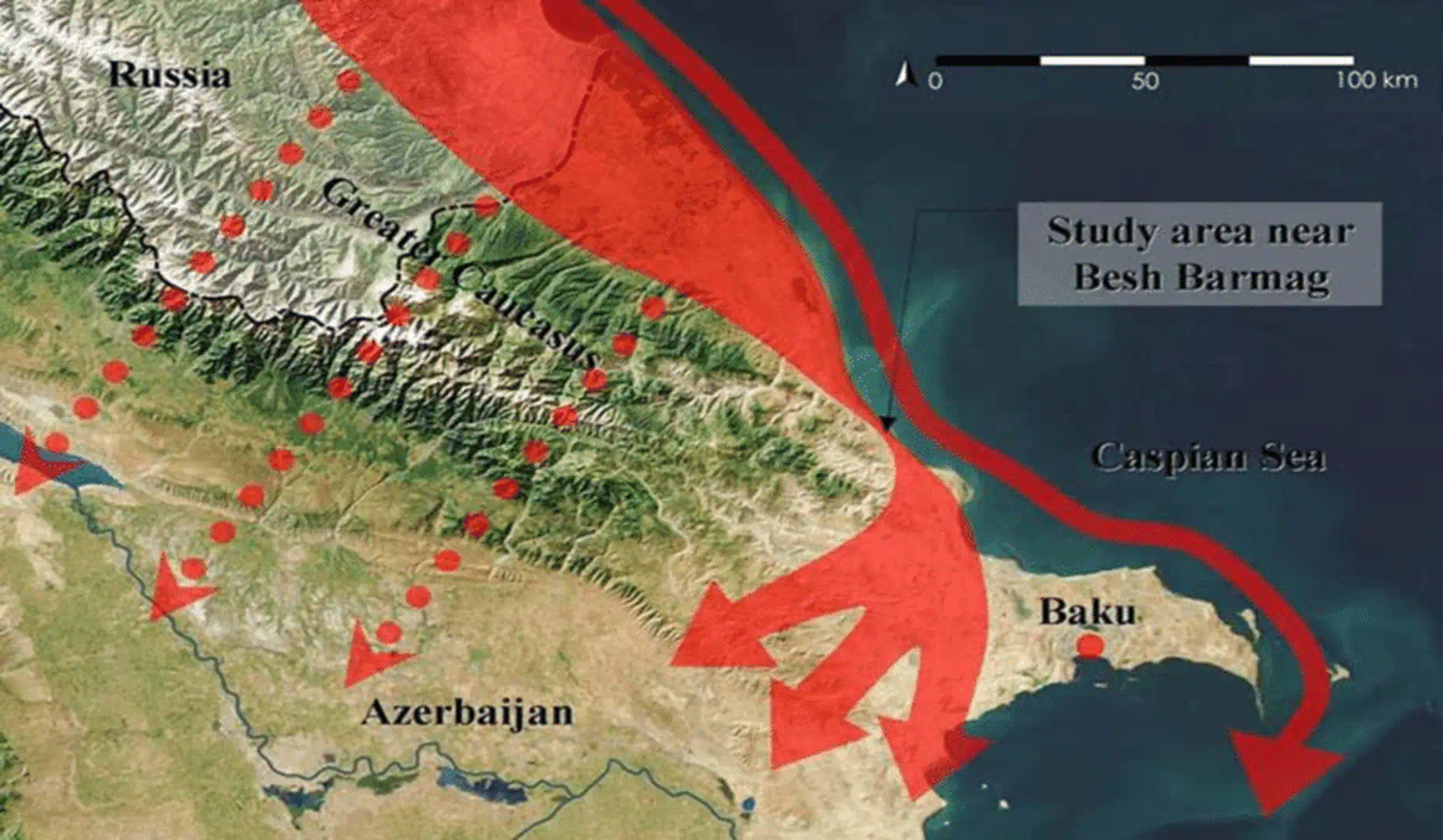
The Beshbarmag migration bottleneck and the main migration routes..
The Caspian Sea forms a huge natural barrier to the east, while the Greater Caucasus Mountains rise immediately to the west. Rather than crossing these obstacles, birds follow the narrow strip of land between them, creating one of the Western Palearctic's most spectacular migration bottlenecks. For centuries, Beshbarmag has been a landmark for travellers moving between Europe and Asia. Its name, meaning "Five Fingers" in Azerbaijani, comes from the shape of its distinctive rocky peaks. But above this ancient landscape, another story unfolds every year: the story of millions of birds travelling between their breeding and wintering grounds.
The site was identified as a key migration area in 2007 and takes its name from the nearby Beshbarmag Hill, located on the easternmost slopes of the Caucasus. Here, migrating birds avoid the natural barriers created by the Caspian Sea and the Caucasus Mountains, concentrating their movements through a corridor only a few kilometres wide. This unique location has hosted annual migration counts, bird ringing projects and youth camps, helping to reveal the incredible scale of bird movements through Azerbaijan.
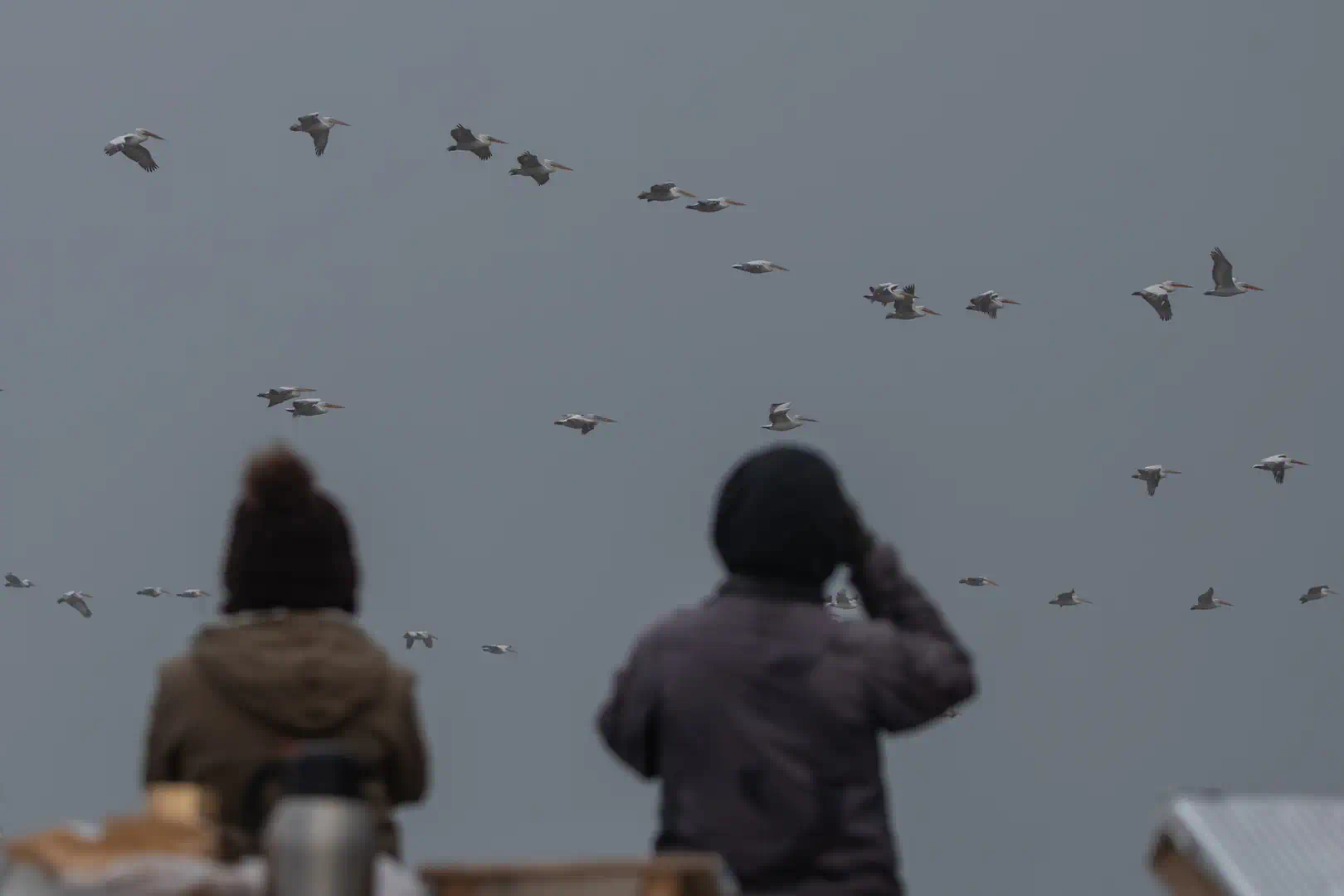
Dalmatian Pelicans flying south over the Beshbarmag bottleneck © Elvin Mammadov
Interestingly, the importance of this area for birds has been recognised for centuries. In a letter written in the early 14th century by Mongol ruler Ghazan Khan to Pope Boniface VIII, the place is mentioned as Qush Qapugh ("Bird Gate" in Turkic), likely referring to the area around Beshbarmag. Today, the location offers a different opportunity: not as a place to take birds, but as a place to appreciate them.
Beyond its importance for birdwatching, Beshbarmag has also become an important centre for migration research and conservation in Azerbaijan. Every autumn, ornithologists, volunteers, university students and schoolchildren gather here to monitor migration, learn bird identification and contribute to long-term conservation efforts. The data collected helps scientists better understand migration routes, monitor bird populations and support the protection of one of the Western Palearctic's most important flyways.
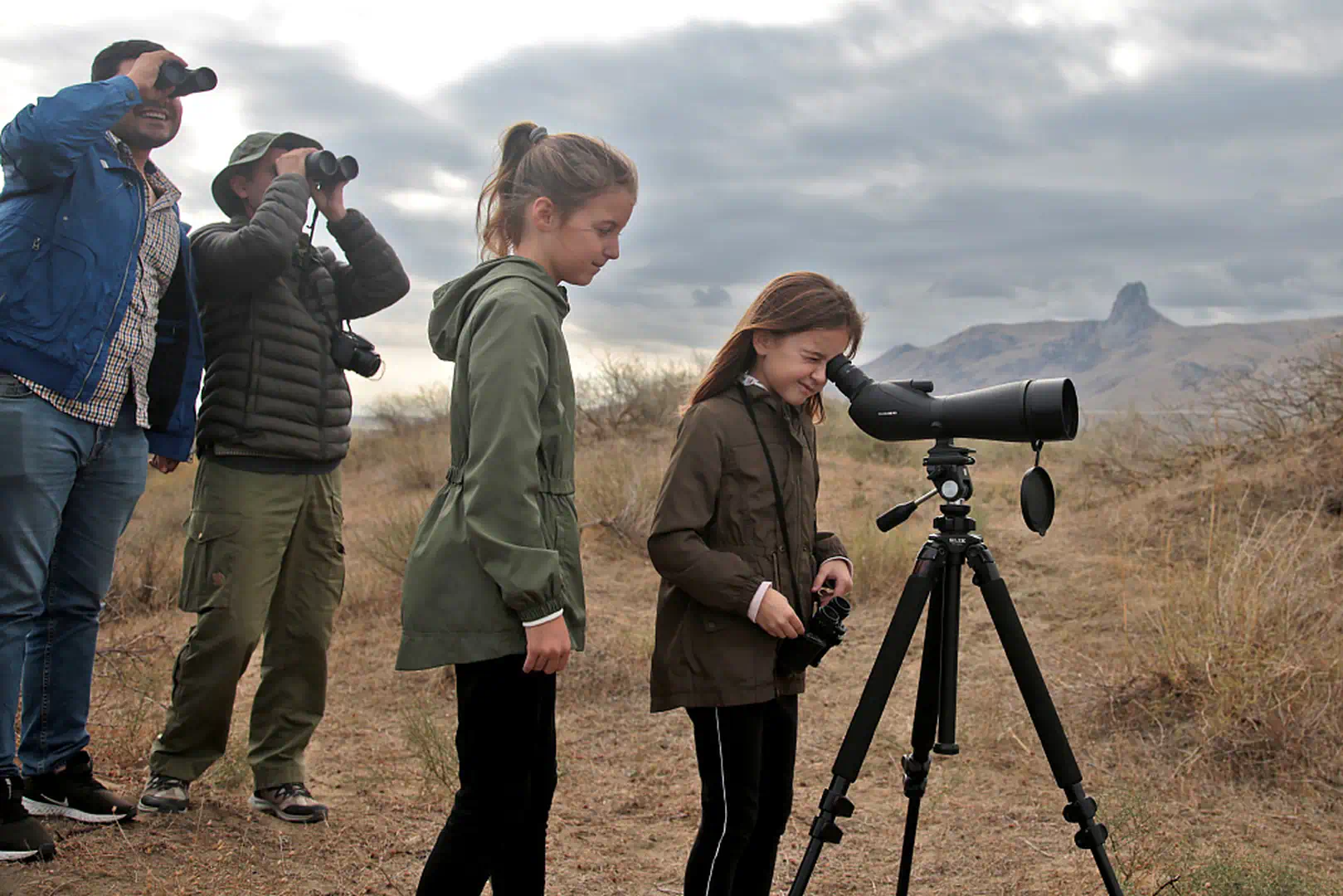
Birdwatchers and young nature enthusiasts discovering migration at Beshbarmag © Max Baumgarten
Standing at Beshbarmag during the peak migration season, you quickly understand the magic of this place. At first, the sky may appear quiet. Then a distant flock emerges on the horizon. Slowly, the landscape comes alive as birds begin circling above, using rising air currents before continuing their journey south.
No two migration days are ever the same. One morning may begin with groups of herons overhead, while another is dominated by thousands of larks, endless lines of cormorants or huge flocks of Little Bustards stretching in front of the Caucasus foothills. Weather, wind direction and seasonal timing constantly shape the spectacle, making every visit unique.
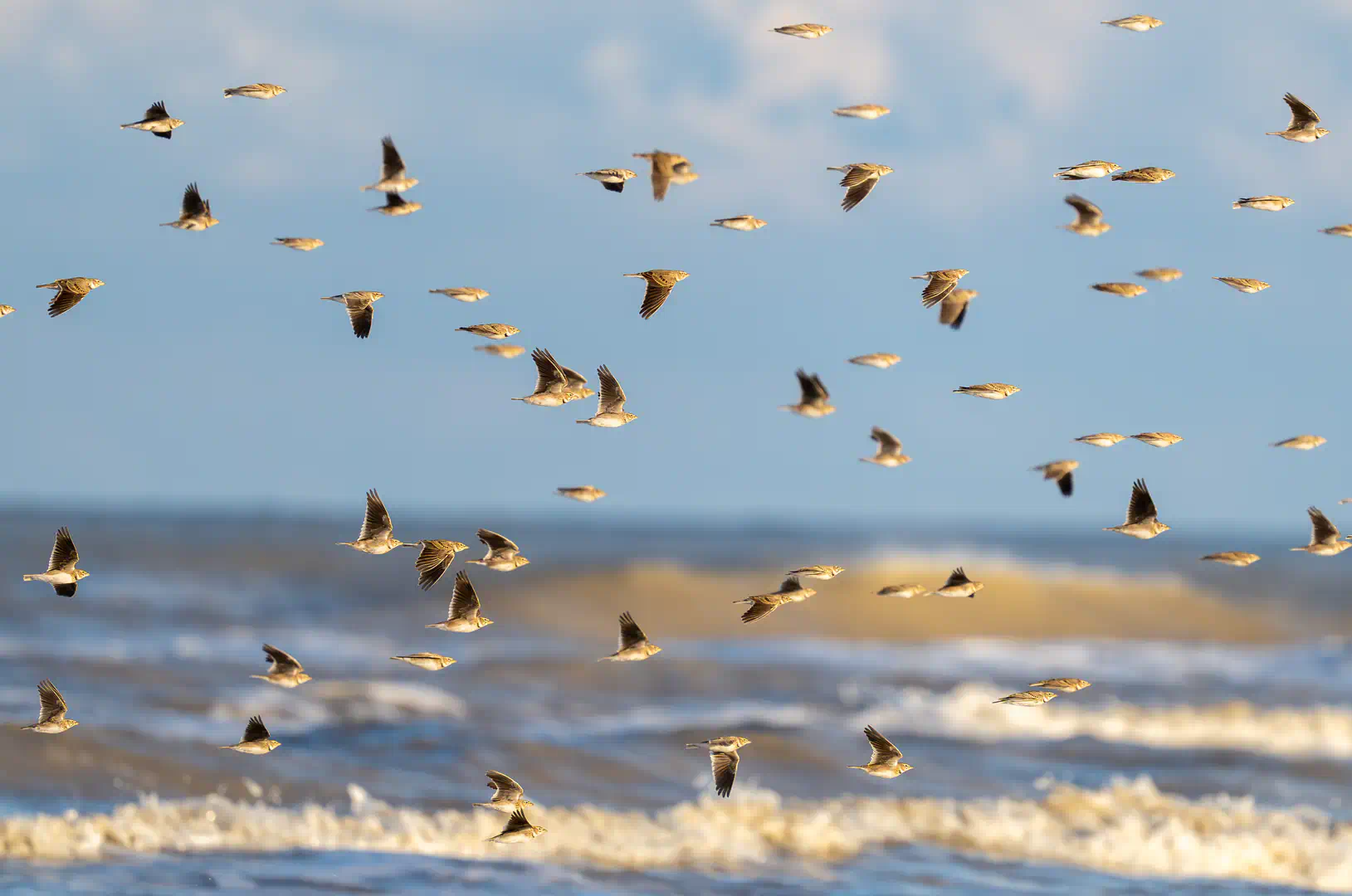
A flock of migrating Calandra larks at Beshbarmag © Fred Olk
Among the most impressive visitors are birds of prey. Steppe eagle, Eastern imperial eagle, Lesser spotted eagle, buzzards and Black kites are among the spectacular raptors that can be observed during autumn migration. But the diversity of Beshbarmag goes far beyond soaring birds. Large groups of Dalmatian Pelicans may pass along the Caspian coastline, while colourful Blue-cheeked bee-eaters, Black-winged pratincoles, Pallid harriers, Pallas's gulls, Little bustards and many other species add to the richness of this natural spectacle. Along the nearby coast and wetlands, a variety of waterfowl, waders and gulls continue their journeys, creating a constantly changing scene of birdlife across the landscape.
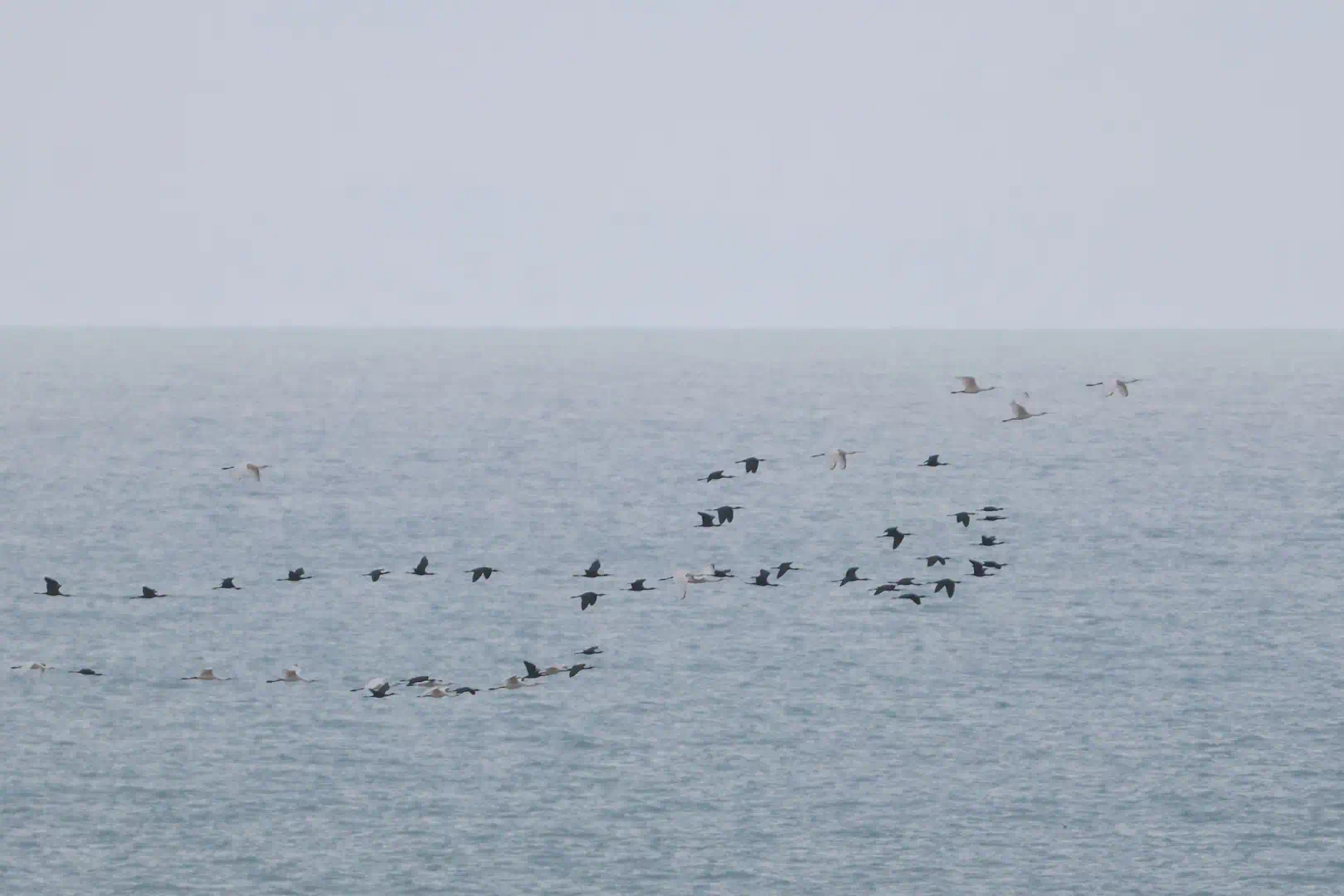
Mixed group of Spoonbill and Glossy ibis following the Caspian coastline during autumn migration © Elvin Mammadov
Even more remarkable are the sheer numbers. On exceptional migration days, more than 100,000 birds may pass the observation point, while the entire autumn season sees between two and three million birds using this natural flyway. During the autumn of 2018, an international team recorded nearly three million migrating birds over a three-month period. More recently, in 2024 alone, over 181,000 Little Bustards were counted in just 29 days, representing a significant proportion of the estimated global population of this globally threatened species. These extraordinary figures highlight the international conservation importance of Beshbarmag.
However, the beauty of Beshbarmag is not only measured by the number of birds. It is also about the experience. You do not need to be an expert birder to enjoy migration. Watching hundreds of birds moving across the sky, hearing their calls, or seeing a large eagle glide silently above the mountains can be a memorable experience for anyone who loves nature.
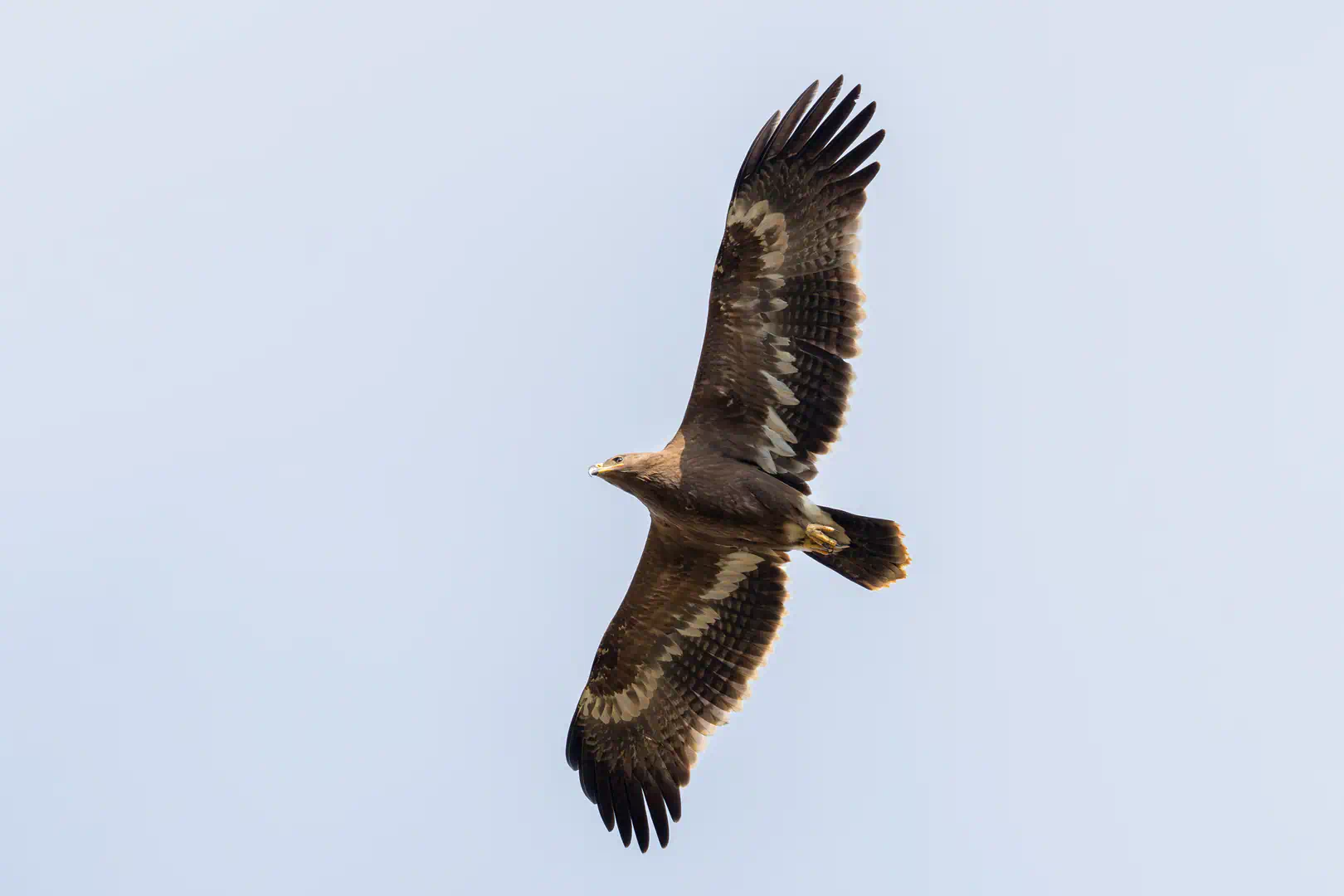
A Steppe Eagle soaring over the Beshbarmag migration corridor © Fred Olk
Visitors can also experience how migration monitoring is carried out. Watching experienced counters identify birds, estimate flock sizes and record migration data offers a fascinating insight into the science behind bird migration. It transforms a day of birdwatching into an opportunity to understand one of nature's greatest phenomena while seeing conservation in action.
Around the world, birdwatching has become one of the fastest-growing forms of ecotourism. Unlike traditional tourism that focuses on a single attraction, birdwatching encourages travellers to explore landscapes, discover local communities and experience nature at its own rhythm.
Besh Barmag is located approximately 90 kilometres north of Baku and can be reached by car along the Baku–Guba highway. The observation areas are located close to the main road, making the site accessible even for visitors who are discovering birdwatching for the first time. Additionally, Beshbarmag visit can easily be combined with visits to the Candy Cane Mountains, the Greater Caucasus, or the Caspian coastline, making it an ideal destination for anyone wishing to combine wildlife, culture and nature in a single journey. For the best experience, it is recommended to arrive in the morning, bring binoculars, comfortable clothing suitable for outdoor conditions, some food and most importantly, patience and curiosity.
The best time to visit Besh Barmag for bird migration is during the autumn season, especially after mid-October, when the movement of raptors and other migratory birds is at its peak. However, migration continues throughout the autumn, and different periods bring different species and experiences.
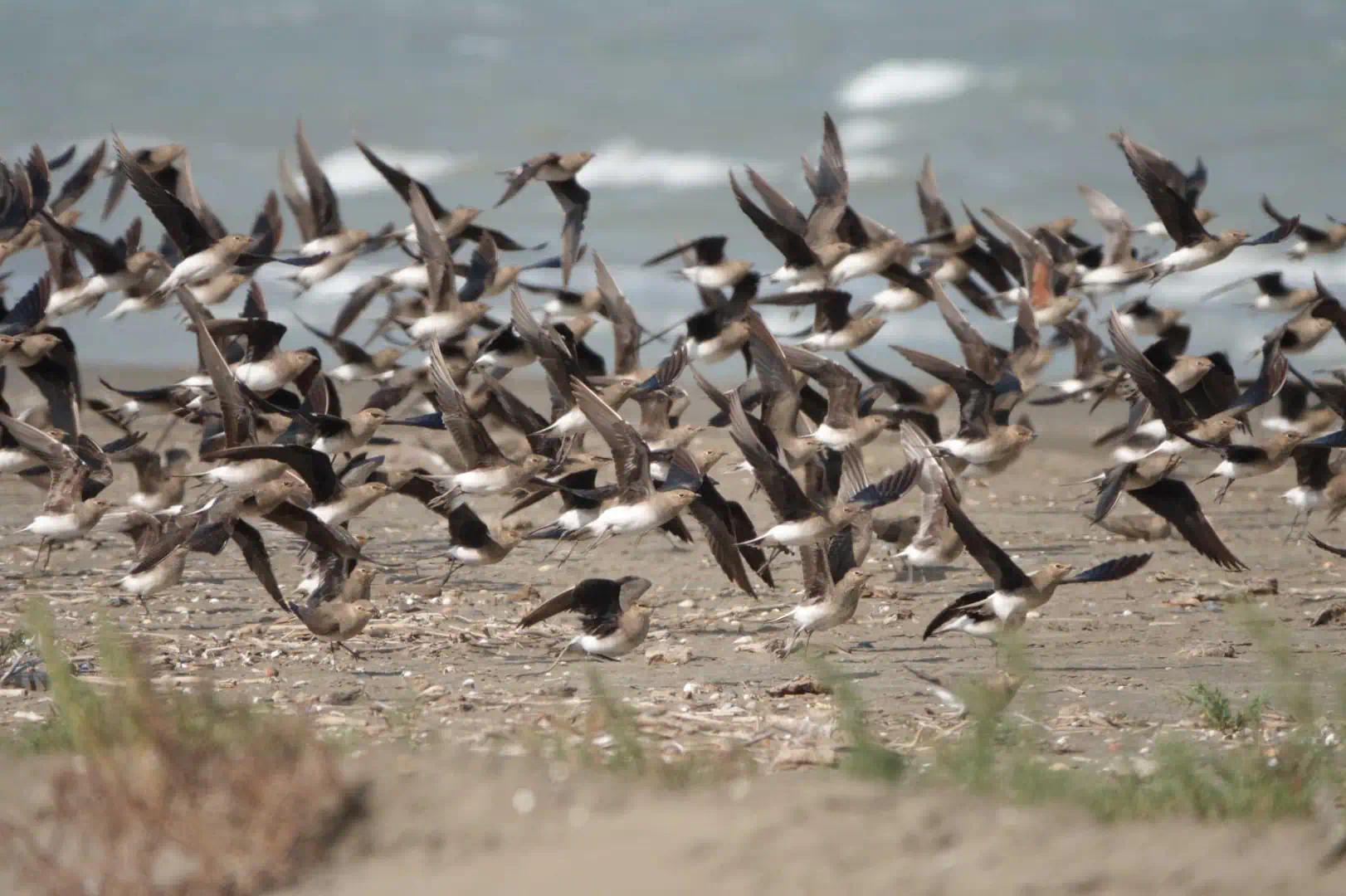
Hundreds of Black-winged pratincoles gathering along the Caspian coast during migration © Sebastian Andrejeff
Although migration takes place throughout autumn, each month has its own character. September is known for colourful migrants such as Blue-cheeked bee-eaters, Black-winged pratincoles, herons, terns and the first waves of raptors. October is often the best month for birds of prey, with Steppe eagles, buzzards, Imperial eagles and thousands of larks, wagtails and starlings passing through the bottleneck. November brings spectacular movements of Little bustards, ducks, geese, pelicans, finches and other late autumn migrants, offering an entirely different migration experience.
Whether you are an experienced birdwatcher, wildlife photographer or simply someone who enjoys spending time in nature, Beshbarmag offers a rare chance to witness one of the world's great bird migrations while learning about the science and conservation behind it.
If you'd like to experience the migration with a local bird guide, we organize autumn birding tours centred around Beshbarmag, often combining migration watching with visits to other important birding sites across the country.
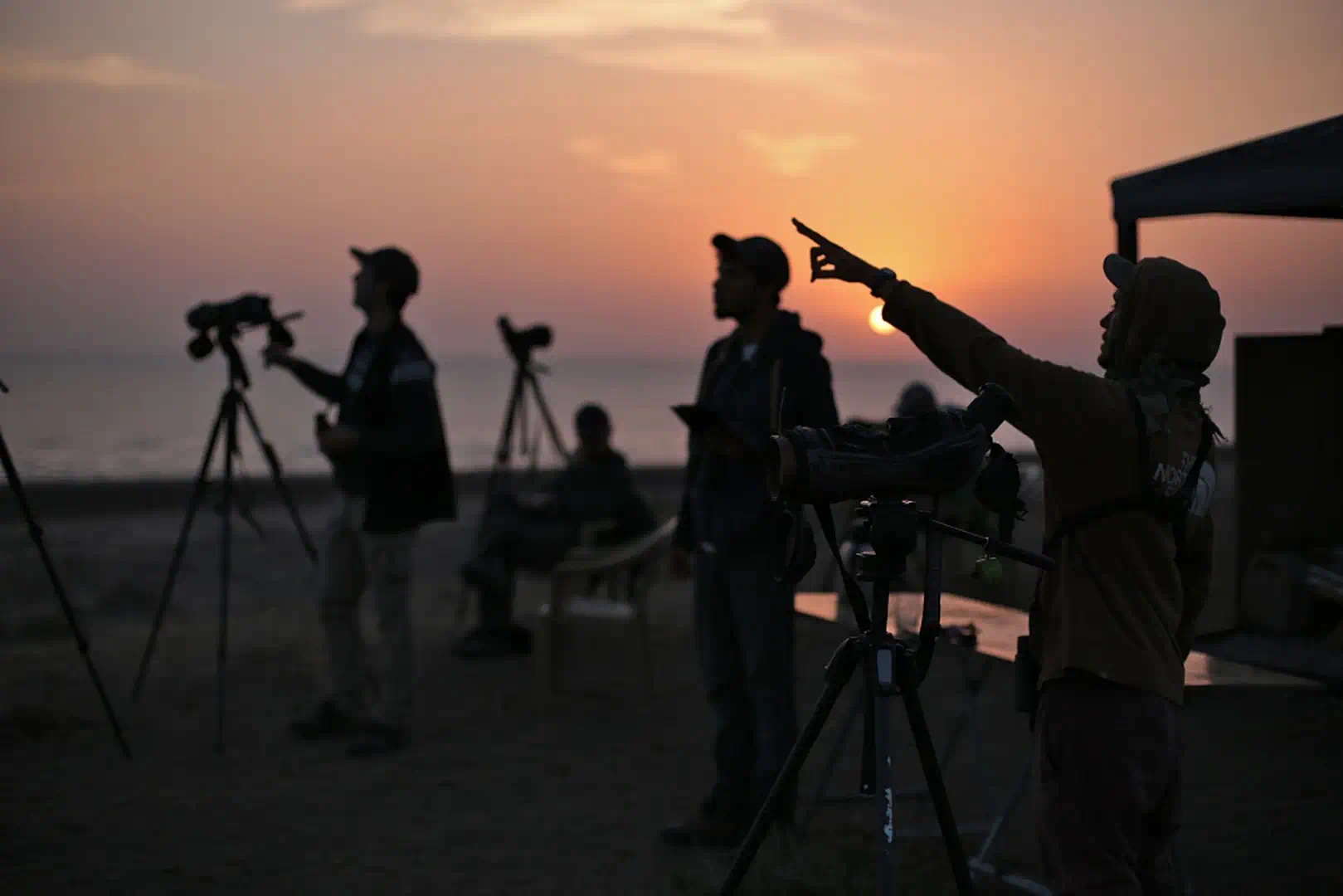
Counting migrating birds at sunrise © Michael Heiss
Every autumn, migrating birds remind us that Azerbaijan is not only a bridge between continents and cultures, but also a bridge between ecosystems. Their journey connects Europe, Asia and Africa, making Beshbarmag one of the most remarkable places to witness one of nature's greatest spectacles, and a reminder of why protecting these migration routes matters